 Chalkpatch
Where the schools are good, the neighbourhood usually is too.
Moving house? Find the best place to live for schools.
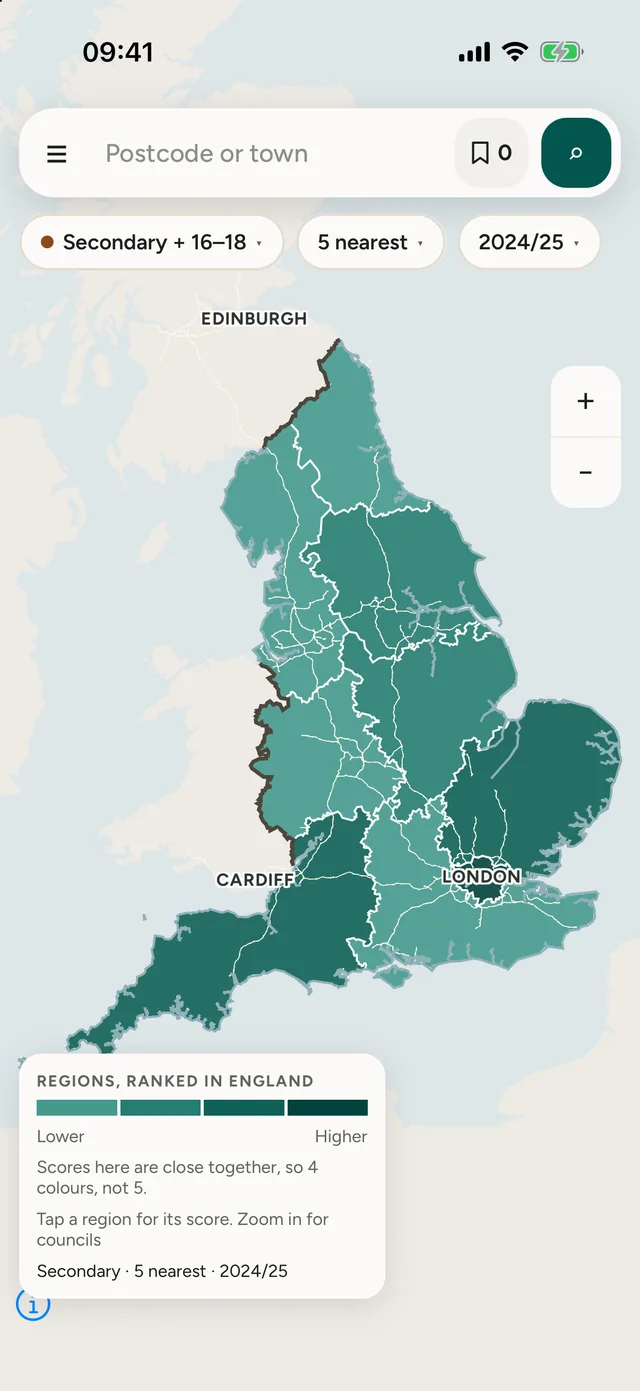
We've coloured every neighbourhood in England by how well its local state schools do, from nursery right through to sixth form.
1.49m
postcodes, each with its own score
8,120
neighbourhoods to compare
5
stages, from nursery to sixth form
Look up any postcode
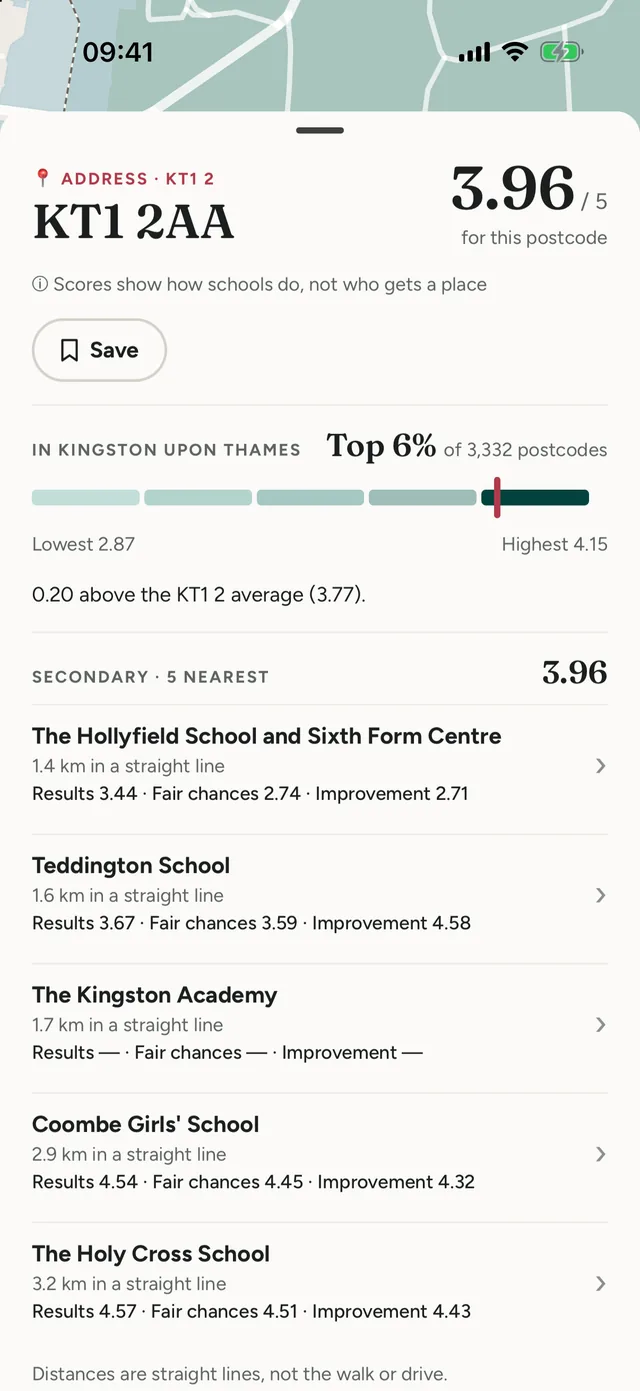
Type in a postcode to see the score for that exact address, worked out from the schools closest to it. It all happens on your phone, so your searches aren't sent anywhere.
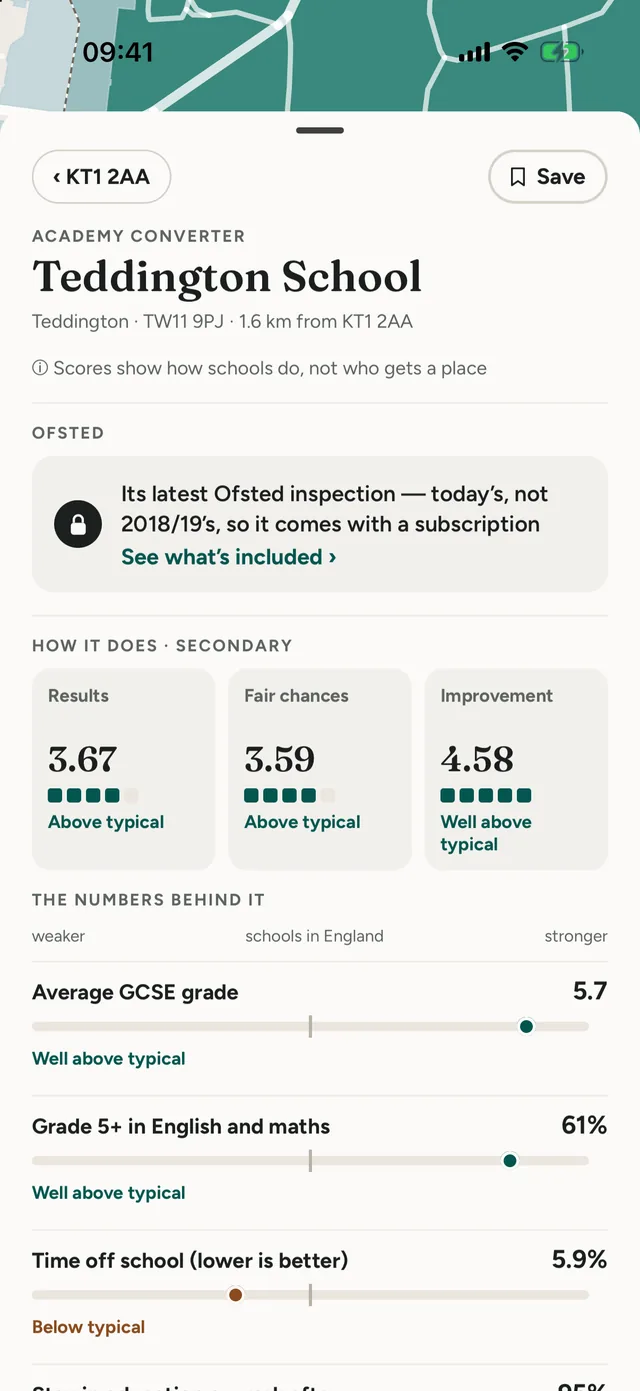
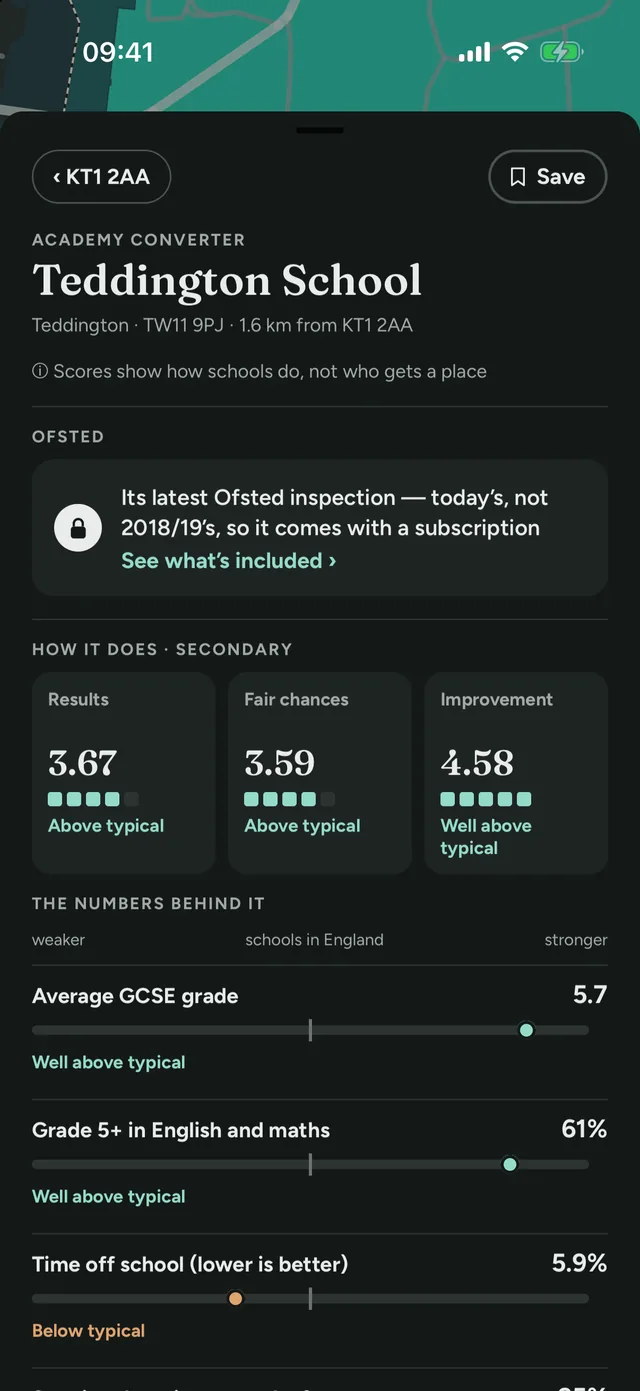
Three scores for every school
We don't roll them into one number. A school with great results can still be slipping, and you'd want to know that before you move.
How hard is it to get in?
How many families put each school first, against the places it had, over the last seven years.
Save and compare
Keep a shortlist of areas, addresses and schools and look at them side by side.
Only public data
Everything comes from the Department for Education, Ofsted, the ONS and Ordnance Survey.
No sign-up
There's no account to make, and your searches stay on your phone.
One thing to bear in mind: living near a school doesn't guarantee a place there. Admission rules change from year to year and differ between councils, so check with the council before you commit to a move.
Questions
What is Chalkpatch?
Chalkpatch is an app for parents who are deciding where to live in England. It colours every neighbourhood on a map by how well its local state schools do, from nursery right through to sixth form, using public data from the Department for Education and Ofsted.
How do I find the best area to live for schools in England?
Start with the areas you could realistically move to, rather than with one school. Chalkpatch shades each neighbourhood by how its nearest state schools have done, so you can compare areas first and then look at the schools in each one.
When will Chalkpatch be available?
Soon. We're getting it ready for the App Store and Google Play.
Which areas does it cover?
England, down to every postcode. Scotland, Wales and Northern Ireland publish their school data differently, so they aren't included for now.
Which schools and stages are included?
State-funded nurseries, primary and secondary schools, plus sixth forms and colleges for 16 to 18-year-olds (A levels and vocational courses). Independent and selective schools are listed with their basic details, but we don't score them.
Where does the data come from?
All of it is public: school performance data from the Department for Education, Ofsted inspections, Get Information about Schools, postcode data from the ONS and maps from Ordnance Survey.
What do the three scores mean?
Results is how pupils did in tests and exams. Fair chances is how well the school does by its disadvantaged pupils. Improvement shows whether results are going up. We keep the three separate rather than adding them together.
Does Chalkpatch show catchment areas?
No. Catchment and priority areas change every year and vary between councils, so we don't draw them. What we do show is how many families put each school as their first choice, compared with the number of places it offered.
Does Chalkpatch rank schools?
No, there's no league table. Chalkpatch compares neighbourhoods by all the schools around them, and for each school you can see its own figures and how its scores were worked out.
Do I need an account? What data do you collect?
No account is needed. Your searches, saved places and your child's month and year of birth stay on your phone. Our privacy policy explains the small amount the service does keep.

Chalkpatch is coming soon to iPhone and Android
Got a question or an idea? Email us at support@chalkpatch.com